
- What defines luxury interior doors
- Why interior doors matter in high-end homes
- Popular materials for luxury interior doors
- Custom doors versus standard designs
- Modern luxury door styles
- Traditional luxury door designs
- Glass interior doors in luxury residences
- Comparing premium interior door options
- Acoustic performance in luxury homes
- Hardware that elevates luxury interiors
- Choosing interior doors that match the home
What defines luxury interior doors
Interior doors in luxury homes serve a purpose that extends far beyond separating rooms. They contribute to the overall architectural identity of a residence, reinforce design consistency, and influence how spaces are experienced on a daily basis. In high-end properties, doors are often viewed as integral design elements rather than purely functional components.
Luxury interior doors are distinguished by exceptional craftsmanship, premium materials, refined detailing, and superior performance. Homeowners investing in upscale residences expect every element of the interior to reflect quality, including features that might otherwise go unnoticed in standard homes.
Modern luxury design emphasizes both aesthetics and functionality. A well-designed interior door can enhance privacy, improve sound insulation, create visual continuity, and elevate the perceived value of an entire property.
Why interior doors matter in high-end homes
Luxury residences are carefully designed environments where every detail contributes to the overall impression. Interior doors influence sightlines, proportions, room transitions, and the flow of natural light throughout the home. Their appearance can either complement the architectural vision or disrupt it.
Unlike standard residential projects where doors are often selected primarily based on budget, luxury homes prioritize customization, material quality, and long-term durability. Designers frequently coordinate door styles with flooring, wall treatments, cabinetry, and trim details to create a cohesive environment.
Premium interior doors also provide practical benefits. Higher-quality construction typically results in smoother operation, improved acoustic performance, and greater resistance to wear over time.
"In luxury interiors, the difference between good design and exceptional design is often found in the details people notice subconsciously."
This philosophy explains why architects and interior designers dedicate significant attention to door selection during high-end residential projects.
Popular materials for luxury interior doors
Material selection plays a central role in determining both the appearance and performance of luxury interior doors. Premium materials offer distinctive textures, visual depth, and durability that help justify their investment.
Natural hardwood remains one of the most desirable choices. Species such as walnut, white oak, mahogany, maple, and teak provide rich character while showcasing unique grain patterns that cannot be replicated entirely by synthetic alternatives.
Engineered wood products are also widely used in luxury construction. They offer enhanced stability while allowing manufacturers to apply premium veneers that achieve the appearance of solid hardwood with greater dimensional consistency.
Common luxury door materials
- Walnut For rich color and sophisticated grain patterns;
- White Oak for timeless elegance and versatility;
- Mahogany For premium traditional interiors;
- Engineered Wood with natural wood veneers;
- Glass For modern and light-filled spaces;
- Metal Accents for contemporary architectural designs;
Many luxury doors combine multiple materials to create unique visual effects while maintaining structural performance.
Custom doors versus standard designs
Customization is one of the defining characteristics of luxury residential construction. While standard door sizes and styles may be suitable for conventional homes, luxury projects often require bespoke solutions tailored to the architecture.
Custom interior doors allow homeowners to specify dimensions, materials, finishes, panel configurations, hardware selections, and decorative details. This flexibility ensures that every component aligns with the overall design concept.
Large entryways, taller ceilings, and expansive open floor plans frequently require oversized doors that cannot be sourced from standard inventories. Custom manufacturing makes these architectural ambitions possible.
Personalization also allows designers to create distinctive interiors that reflect the homeowner's individual style rather than relying on mass-produced solutions.
Modern luxury door styles
Contemporary luxury homes often embrace clean lines and minimalist aesthetics. Interior doors in these properties tend to emphasize proportion, material quality, and simplicity rather than elaborate ornamentation.
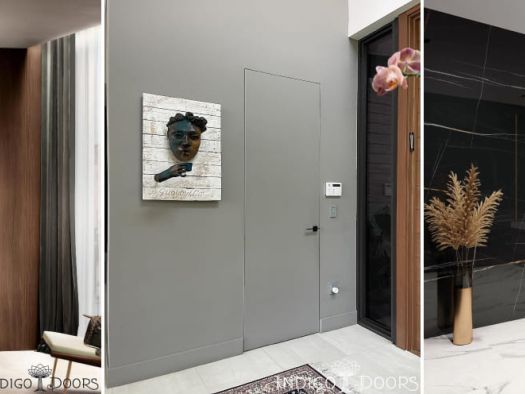
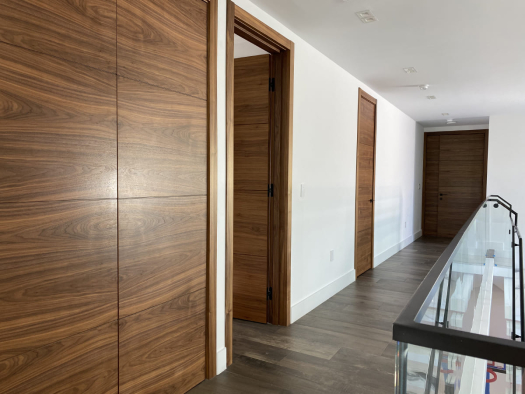
Flush doors with premium veneers have become particularly popular because they create a seamless appearance while highlighting the beauty of natural materials. Hidden hinges and concealed frames further enhance the streamlined aesthetic.
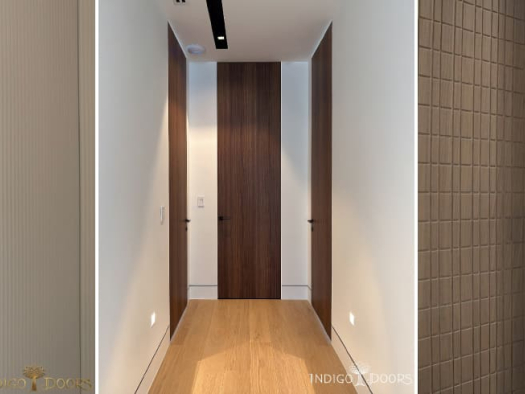
Large-format doors extending from floor to ceiling are another growing trend. These installations create dramatic visual impact while helping spaces feel larger and more architecturally refined.
- Flush Doors with natural wood veneers;
- Floor-To-ceiling door systems;
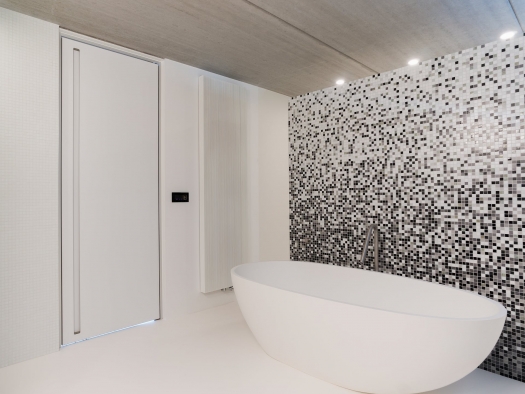
- Hidden Frame doors;
- Pivot Door designs for oversized openings;
- Glass Panel doors for enhanced light flow;
These styles demonstrate how luxury design can remain visually striking while maintaining elegance and restraint.
Traditional luxury door designs
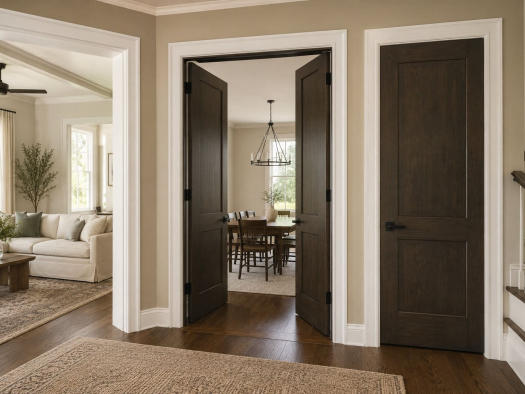
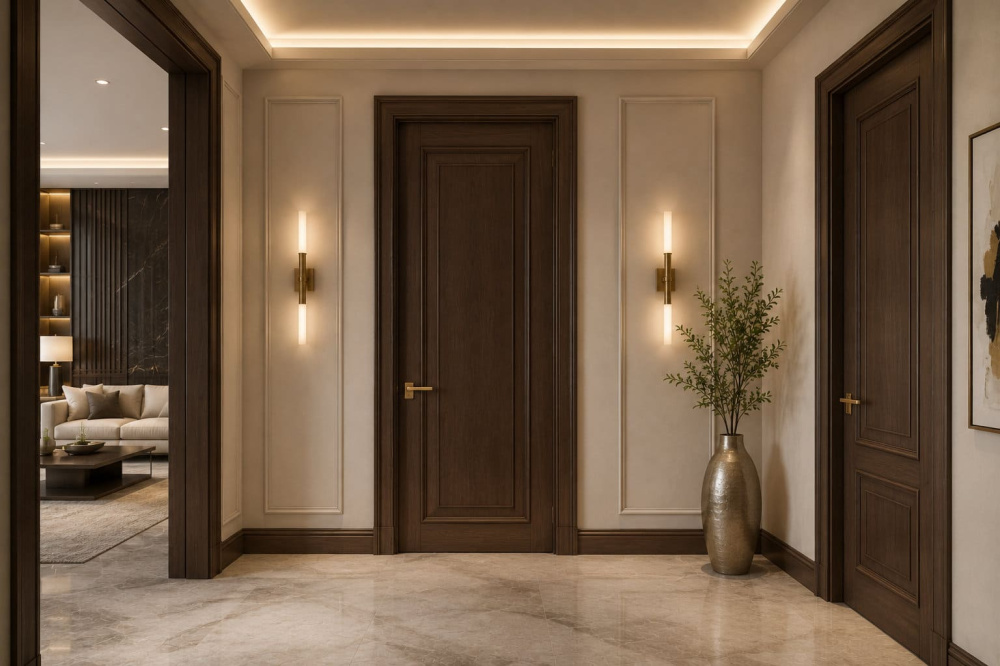
Although contemporary aesthetics dominate many new construction projects, traditional luxury interiors continue to maintain strong appeal. Classic door styles often feature raised panels, intricate millwork, decorative moldings, and handcrafted detailing.
These doors are frequently found in Mediterranean, European-inspired, transitional, and estate-style homes. Their craftsmanship contributes to a sense of permanence and sophistication that resonates with many homeowners.
Traditional luxury doors are particularly effective when paired with premium finishes, custom trim packages, and carefully selected architectural details throughout the residence.
The enduring popularity of traditional designs demonstrates that luxury can be expressed through both contemporary simplicity and classic craftsmanship.
Glass interior doors in luxury residences
Glass doors have become increasingly popular in upscale residential design. They allow natural light to move freely between spaces while maintaining a sense of separation when needed.
Luxury homes frequently utilize glass doors for home offices, wine rooms, libraries, fitness spaces, and transitional living areas. Depending on privacy requirements, homeowners can choose from clear, frosted, textured, or tinted glass options.
Framing materials also influence the overall aesthetic. Slim black metal frames are particularly popular in modern luxury interiors, while wood-framed glass doors often complement transitional and traditional spaces.
"Natural light remains one of the most valuable design elements in any luxury residence."
Glass door systems help maximize that asset while enhancing openness and visual connectivity.
Comparing premium interior door options
| Door type | Visual impact | Privacy | Customization level | Luxury appeal |
|---|---|---|---|---|
| Solid hardwood | High | Excellent | High | Premium |
| Wood veneer flush door | High | Excellent | High | Premium |
| Glass door | High | Moderate | High | Premium |
| Pivot door | Very high | Excellent | Very high | Luxury statement |
| Hidden frame door | Very high | Excellent | High | Contemporary luxury |
Acoustic performance in luxury homes
Luxury living is often associated with comfort, privacy, and tranquility. Interior doors play an important role in achieving these objectives by reducing sound transmission between rooms.
Solid-core construction is commonly specified in premium residences because it provides superior acoustic performance compared to hollow-core alternatives. Bedrooms, home theaters, offices, and wellness spaces particularly benefit from enhanced sound isolation.
Door seals, frame quality, and installation precision also affect acoustic performance. Even the finest door can underperform if surrounding components are not properly integrated.
Many homeowners consider sound control just as important as aesthetics when selecting luxury interior doors.
Hardware that elevates luxury interiors
Door hardware significantly influences both appearance and user experience. Premium handles, hinges, locks, and accessories contribute to the perception of quality while improving daily functionality.
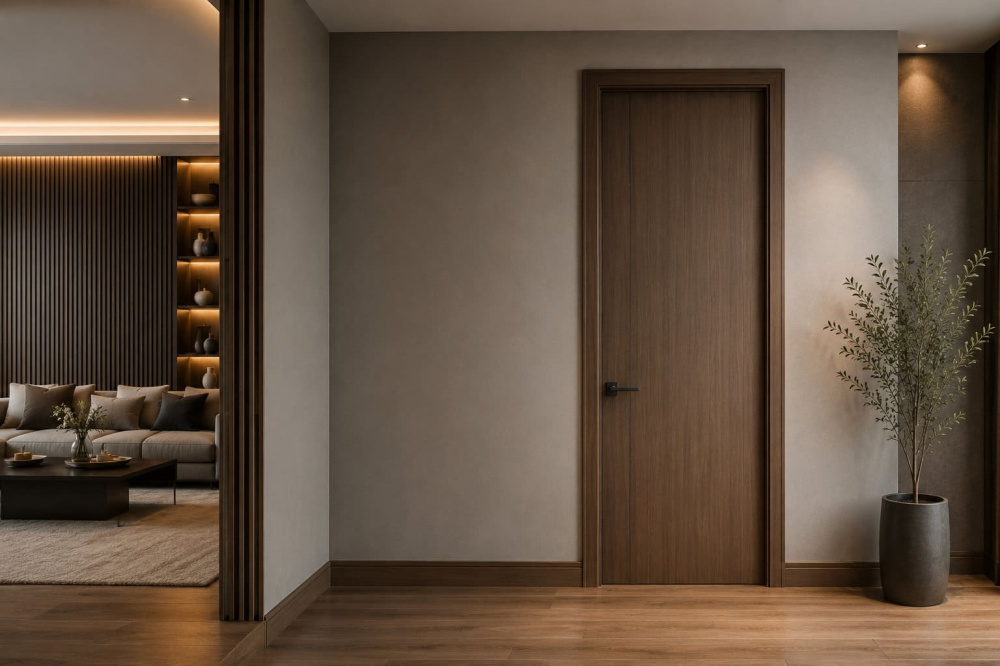
Luxury projects frequently incorporate custom hardware finishes such as brushed brass, matte black, polished nickel, satin bronze, or architectural bronze. These finishes are carefully coordinated with lighting fixtures, plumbing fittings, and cabinetry hardware.
Concealed hinges, magnetic latches, and soft-close mechanisms have become increasingly popular because they enhance both aesthetics and performance. Small details such as these often distinguish luxury interiors from standard residential construction.
High-end hardware also tends to provide greater durability and smoother operation over many years of use.
Choosing interior doors that match the home's architecture
The most successful luxury interiors maintain consistency throughout the property. Interior doors should support the architectural style of the home rather than appear disconnected from it.
Modern residences typically benefit from flush doors, concealed frames, and minimalist detailing. Transitional homes often combine clean lines with subtle traditional elements. Classical and estate-style properties may call for paneled doors with rich finishes and decorative millwork.
Scale is equally important. Larger rooms, wider hallways, and higher ceilings often require oversized doors to maintain visual balance. Proper proportions help create interiors that feel intentional and professionally designed.
"Luxury is rarely defined by excess; it is defined by thoughtful choices executed at the highest level."
When interior doors are selected with this principle in mind, they become an essential part of a sophisticated and cohesive living environment.