
- Why Interior Doors Matter for Sound Control
- Understanding How Sound Travels Through Doors
- The Difference Between Hollow-Core and Solid-Core Doors
- Choosing the Best Materials for Soundproof Interior Doors
- Why Door Thickness Makes a Difference
- Understanding STC Ratings When Buying Interior Doors
- Sealing Gaps Around the Door for Better Soundproofing
- Sliding Doors Versus Hinged Doors for Noise Reduction
- Soundproofing a Home Office with the Right Door
- Interior Doors for Media Rooms and Home Theaters
- How Modern Interior Doors Combine Style and Acoustic Performance
- Professional Installation Makes a Significant Difference
- Common Mistakes Homeowners Make When Soundproofing a Room
- Investing in the Right Interior Door for Long-Term Comfort
Creating a quieter and more comfortable home environment has become a priority for many homeowners. Whether you're working remotely, building a home office, setting up a media room, or simply trying to reduce noise between living spaces, soundproofing plays a major role in improving everyday comfort. While walls, floors, and ceilings often receive the most attention, interior doors are frequently overlooked despite being one of the most significant pathways for sound transmission.
A standard hollow-core door may allow conversations, television noise, and household activity to travel freely between rooms. Choosing the right interior door can dramatically improve acoustic performance while enhancing the overall appearance of your home. Understanding how different door materials, construction methods, and installation techniques affect sound insulation is the key to creating a quieter space.
Why Interior Doors Matter for Sound Control
Many homeowners invest in insulation, acoustic panels, and rugs to reduce noise, only to discover that sound continues to leak through door openings. This happens because doors often represent the weakest point in a room's sound barrier.
Sound waves naturally seek the path of least resistance. Even when walls are heavily insulated, a poorly constructed interior door can undermine the effectiveness of the entire room. Hollow-core doors contain large empty spaces inside their structure, making them particularly ineffective at blocking airborne noise.
In modern open-concept homes, this issue becomes even more noticeable. Family activities, home office meetings, gaming sessions, and entertainment systems can easily interfere with one another when doors fail to provide adequate sound separation.
A properly selected interior door acts as an acoustic barrier that helps maintain privacy while reducing distractions throughout the home.
A room can only be as quiet as its weakest sound barrier, and in many homes, that barrier is the door.
Understanding How Sound Travels Through Doors
Before selecting a soundproof interior door, it helps to understand the mechanics behind sound transmission. Sound reaches adjacent spaces through several pathways, including direct transmission through materials and leakage around door edges.
When sound waves strike a door, part of the energy is reflected back into the room, while another portion passes through the material itself. Lightweight doors vibrate more easily, allowing greater sound transfer.
Small gaps around the perimeter of a door create additional problems. Even a narrow opening beneath a door can allow significant amounts of noise to pass between rooms. This explains why many homeowners continue to hear conversations despite having doors closed.
The effectiveness of a door's acoustic performance depends on several factors:
-
Door weight and density
-
Core construction
-
Door thickness
-
Frame quality
-
Seal effectiveness
-
Installation precision
Each component contributes to the overall ability of the door system to reduce unwanted noise.
The Difference Between Hollow-Core and Solid-Core Doors
One of the most important decisions when choosing an interior door for soundproofing is selecting the proper core construction.
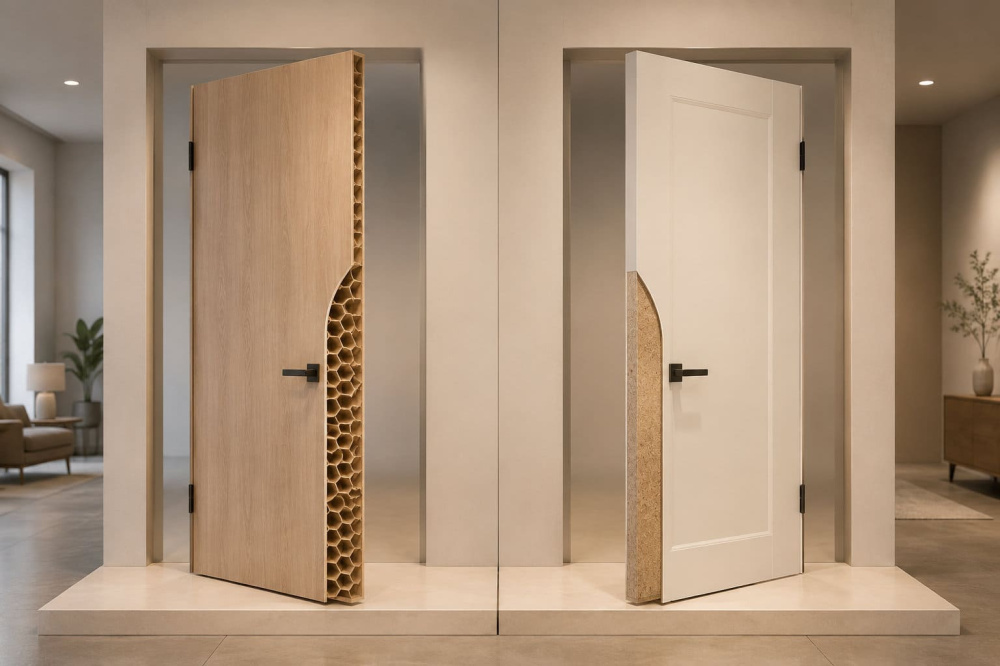
Hollow-core doors are among the most common options found in residential construction due to their affordability and lightweight design. However, these advantages come at the expense of acoustic performance. The empty internal structure provides little resistance to sound waves.
Solid-core doors offer a dramatically different experience. Their dense engineered wood or composite core significantly reduces sound transmission by adding mass and limiting vibration.
Homeowners often notice an immediate improvement after replacing hollow-core doors with solid-core alternatives. Conversations become less audible, television noise is reduced, and overall room privacy increases.
For spaces requiring enhanced sound isolation, solid-core doors represent one of the most cost-effective upgrades available.
When Hollow-Core Doors May Still Be Acceptable
Not every room requires maximum sound isolation. Closets, storage rooms, laundry areas, and utility spaces may function perfectly well with standard hollow-core doors.
In these situations, budget considerations often outweigh acoustic performance requirements. However, bedrooms, home offices, nurseries, media rooms, and study areas typically benefit significantly from solid-core construction.
The decision should always reflect the intended use of the room and the desired level of privacy.
Choosing the Best Materials for Soundproof Interior Doors
The material used in door construction directly influences its ability to block noise. Dense materials generally perform better because they resist vibration and reduce sound transmission.
Solid wood doors remain among the most effective options for residential sound control. Their substantial mass creates a natural barrier against airborne noise while offering timeless aesthetic appeal.
Engineered wood doors have become increasingly popular due to their combination of durability, stability, and acoustic performance. They often provide excellent sound reduction while minimizing issues related to warping and seasonal expansion.
Other commonly used materials include:
-
Solid wood
-
MDF-core doors
-
Engineered wood composite doors
-
Acoustic-rated specialty doors
-
Mineral-core soundproof doors
Each option offers varying levels of sound reduction depending on the specific application and budget.
Why Door Thickness Makes a Difference
Many homeowners focus exclusively on door materials while overlooking the importance of thickness. A thicker door generally contains more mass, which improves its ability to block sound waves.
Standard residential interior doors are often approximately 1⅜ inches thick. While suitable for general use, thicker doors provide enhanced acoustic performance due to their increased density and structural strength.
Acoustic-rated doors frequently feature greater thickness to achieve higher sound transmission class (STC) ratings. These specialized designs help limit sound movement between adjacent rooms.
The relationship between thickness and sound control is particularly noticeable in home offices and entertainment spaces where minimizing distractions is essential.
Thicker doors also tend to feel more substantial and premium, contributing to both functionality and overall home value.
Understanding STC Ratings When Buying Interior Doors
The Sound Transmission Class, commonly known as STC, is an industry-standard measurement used to evaluate how effectively a building component blocks airborne sound.
A higher STC rating indicates better acoustic performance. Standard hollow-core doors often achieve relatively low ratings, while solid-core and acoustic doors perform significantly better.
As a general guideline:
-
STC 20–25 allows most conversations to be heard clearly
-
STC 30–35 reduces normal speech considerably
-
STC 40–45 provides strong residential sound isolation
-
STC 50+ offers professional-level acoustic separation
For most homeowners, achieving an STC rating above 30 can noticeably improve room privacy and comfort.
Understanding these ratings allows buyers to compare products objectively rather than relying solely on marketing claims.
Sealing Gaps Around the Door for Better Soundproofing
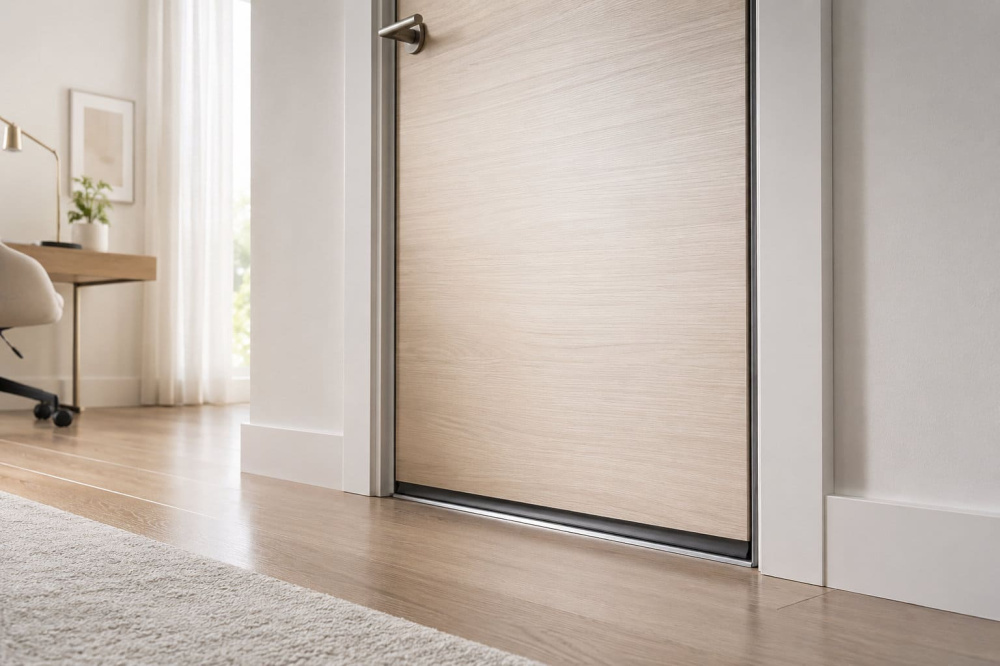
Even the highest-quality solid-core door will struggle to perform effectively if sound can travel through gaps around the frame. Many homeowners are surprised to learn that small openings can significantly reduce overall acoustic performance.
The space beneath the door is often the most problematic area. Sound waves pass easily through this gap, allowing noise to move freely between rooms. Installing a door sweep or automatic door bottom can dramatically reduce this issue.
Weatherstripping is another highly effective solution. While commonly associated with exterior doors, acoustic-grade weatherstripping can also improve sound isolation on interior doors. These seals compress when the door closes, minimizing air leakage and reducing sound transfer.
The frame itself should also be inspected carefully. Over time, settling and normal wear can create tiny openings that compromise soundproofing efforts. Addressing these issues often produces noticeable improvements without requiring a complete door replacement.
The Importance of Door Sweeps
Door sweeps create a physical barrier at the bottom of the door where sound commonly escapes. Modern designs are available in various materials, including rubber, silicone, and brush-style configurations.
The most effective options create a tight seal without making the door difficult to open or close. When combined with perimeter seals, door sweeps help transform a standard solid-core door into a much more effective acoustic barrier.
For home offices and bedrooms, this relatively inexpensive upgrade often delivers excellent value.
Sliding Doors Versus Hinged Doors for Noise Reduction
Homeowners frequently ask whether sliding interior doors provide the same level of soundproofing as traditional hinged doors. In most situations, hinged doors offer superior acoustic performance.
Sliding doors require clearance gaps that allow them to move freely along tracks. These openings create pathways for sound transmission that are difficult to eliminate completely.
Traditional swing doors, by contrast, press tightly against stops and seals when closed. This design naturally creates a stronger acoustic barrier.
That does not mean sliding doors should be avoided altogether. Modern barn doors and pocket doors can still perform adequately in certain applications, particularly when aesthetics and space efficiency are priorities.
However, for rooms where privacy and noise control are essential, hinged solid-core doors generally remain the preferred solution.
Soundproofing a Home Office with the Right Door
The rise of remote work has transformed home offices from occasional-use spaces into daily work environments. Noise from children, televisions, pets, and household activities can negatively affect concentration and productivity.
A solid-core interior door is often one of the first upgrades recommended by acoustic specialists when creating a dedicated workspace. The improvement can be substantial, particularly when combined with proper seals and quality installation.
Additional benefits include improved speech privacy during virtual meetings and reduced distractions during focused work sessions.
Many professionals working from home find that upgrading their office door provides a greater return on investment than more expensive soundproofing projects.
A quieter workspace supports better concentration, clearer communication, and increased productivity throughout the day.
Features to Prioritize in a Home Office Door
When selecting an interior door for a home office, consider these important factors:
-
Solid-core construction
-
Quality perimeter seals
-
Durable frame materials
-
Professional installation
-
Higher STC ratings
Combining these elements creates a more effective and comfortable working environment.
Interior Doors for Media Rooms and Home Theaters
Media rooms present unique acoustic challenges because they generate significantly more sound than standard living spaces. Movie soundtracks, gaming systems, and surround-sound speakers can easily disturb other occupants of the home.
For these spaces, selecting a soundproof interior door becomes especially important. Many homeowners choose premium solid-core or acoustic-rated doors specifically designed to minimize sound leakage.
The goal is twofold. First, prevent entertainment noise from spreading throughout the house. Second, reduce external sounds that might interfere with the listening experience inside the room.
In higher-end home theaters, specialized acoustic doors may be paired with insulated walls and acoustic treatments to achieve exceptional performance.
The result is a more immersive entertainment environment and a quieter home overall.
How Modern Interior Doors Combine Style and Acoustic Performance
Some homeowners assume that soundproof doors must sacrifice aesthetics. Fortunately, today's interior door market offers numerous options that combine acoustic benefits with sophisticated design.
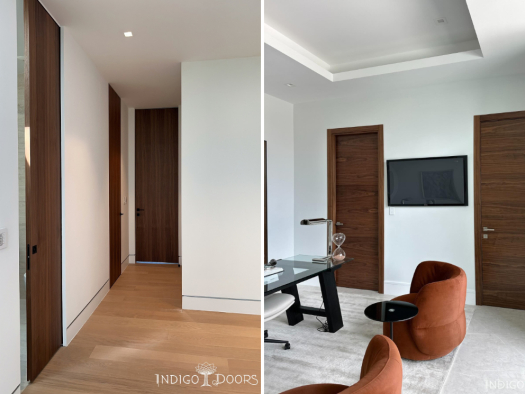
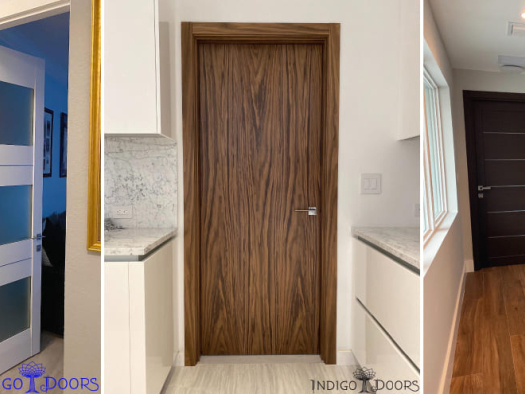
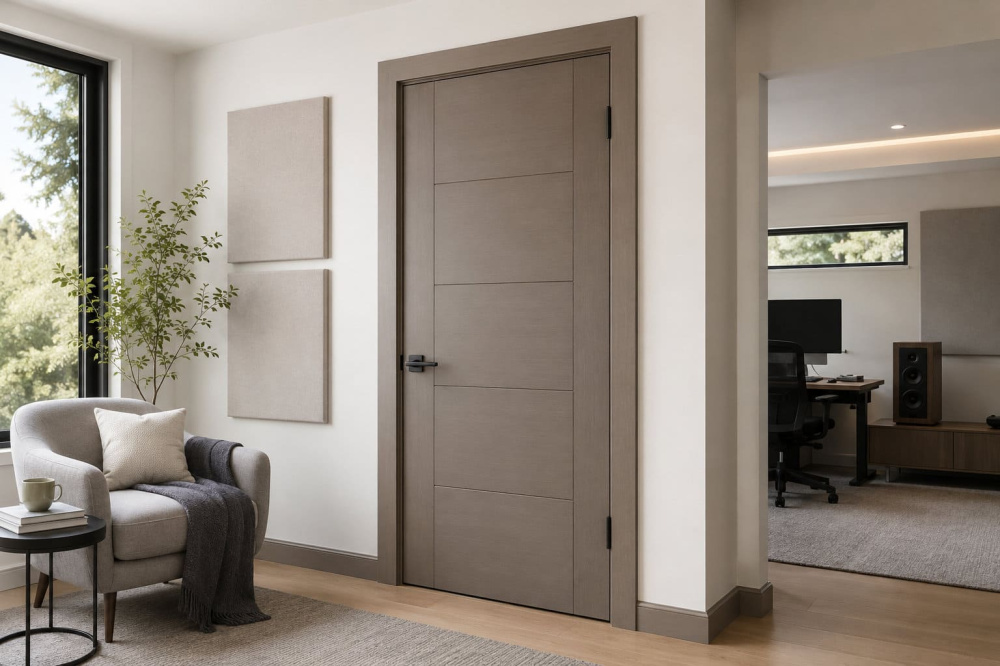
Modern flush doors provide clean lines and minimalist appeal while maintaining the density needed for sound reduction. Wood veneer finishes allow homeowners to achieve contemporary, traditional, transitional, or luxury aesthetics without compromising functionality.
Popular design trends include:
-
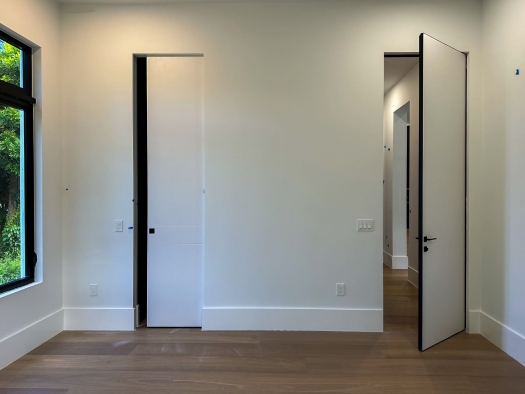
White solid-core doors for contemporary interiors
-
Walnut finishes for warm modern spaces
-
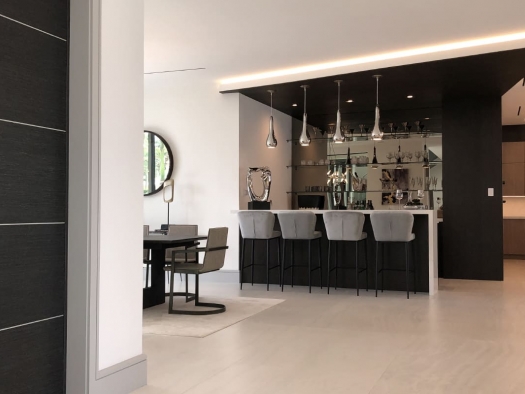
Black interior doors for dramatic contrast
-
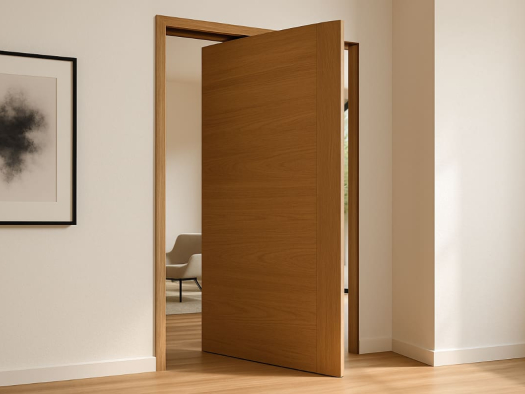
Natural oak textures for organic design schemes
-
Full-height doors for upscale architectural impact
These options demonstrate that effective sound control and attractive design can coexist successfully.
Manufacturers now recognize that homeowners expect both performance and visual appeal, leading to a broader range of premium products than ever before.
Professional Installation Makes a Significant Difference
Even the best soundproof door can underperform if installed incorrectly. Precise installation is essential for achieving the acoustic benefits manufacturers intend.
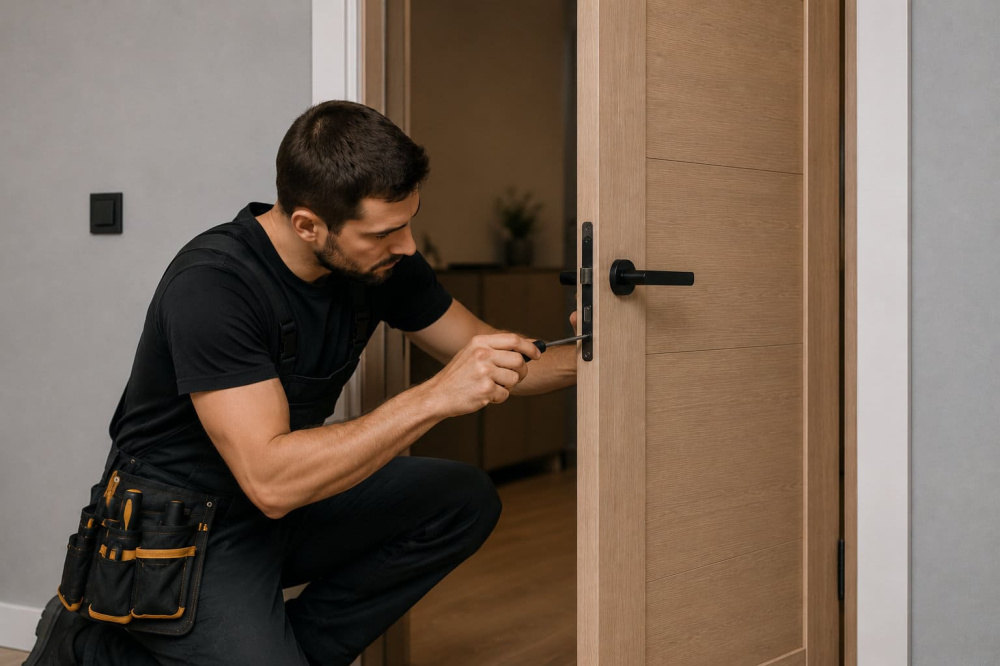
An improperly aligned door may leave gaps around the perimeter, reducing its ability to block sound. Frame issues can also compromise seal effectiveness and create unintended sound pathways.
Professional installers ensure that the door, frame, hinges, and hardware work together as a complete system. This attention to detail often determines whether a soundproofing project succeeds or disappoints.
Homeowners investing in premium interior doors should view installation as an equally important component of the overall project rather than an area for shortcuts.
Proper installation also contributes to smoother operation, greater durability, and longer service life.
Common Mistakes Homeowners Make When Soundproofing a Room
Many soundproofing projects fall short because of preventable mistakes. Understanding these pitfalls can help homeowners achieve better results while avoiding unnecessary expenses.
One common mistake is focusing exclusively on wall insulation while ignoring the door. Another is assuming that any heavy door automatically provides effective sound isolation.
Additional errors frequently include:
-
Leaving gaps around the frame
-
Choosing decorative doors with large glass inserts
-
Ignoring threshold sealing
-
Using lightweight hardware on heavy doors
-
Selecting aesthetics over performance requirements
Each of these issues can reduce the effectiveness of an otherwise well-planned soundproofing strategy.
Careful product selection and professional guidance help avoid these challenges while maximizing long-term satisfaction.
Effective soundproofing is not achieved through a single product but through a complete system working together.
Investing in the Right Interior Door for Long-Term Comfort
Soundproofing is ultimately an investment in comfort, privacy, and quality of life. While many upgrades focus on technology or décor, reducing unwanted noise often delivers benefits that homeowners appreciate every day.
A high-quality solid-core interior door can transform a noisy room into a peaceful retreat. Whether the goal is creating a productive home office, a relaxing bedroom, or an immersive entertainment space, the right door plays a critical role in achieving that objective.
Modern homeowners increasingly recognize that acoustic comfort is just as important as visual design. As homes continue to serve multiple purposes, from workspaces to classrooms to entertainment centers, effective noise control becomes even more valuable.
Choosing the right interior door is one of the smartest and most practical steps toward creating a quieter, more functional home. With proper materials, professional installation, and attention to sealing details, homeowners can enjoy meaningful improvements in privacy and sound reduction for many years to come.